
Every architect eventually runs into this situation:
You know the issue better than the planner reviewing it.
Not planning in general. Not their job.
This issue. This project.
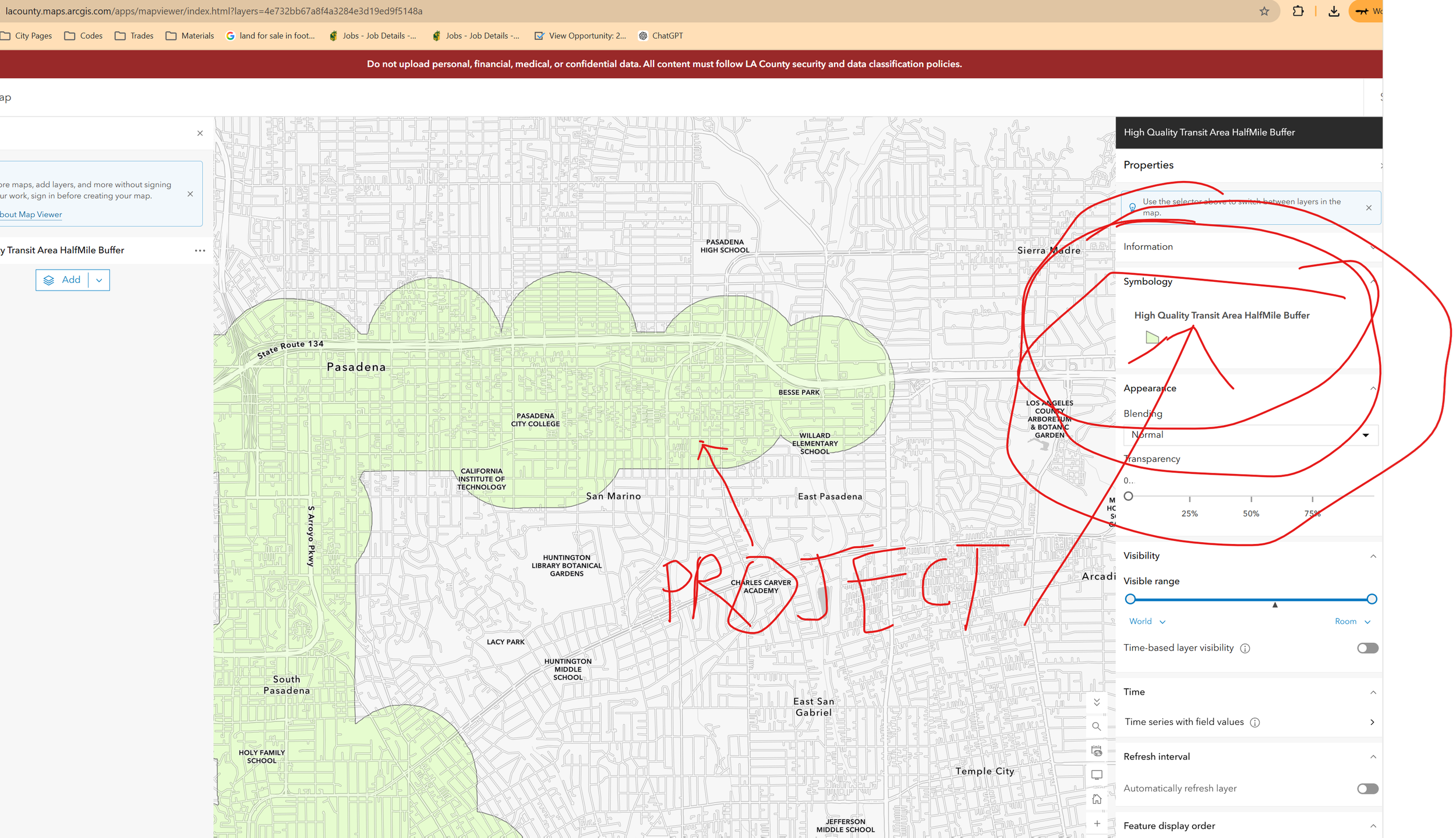
On a recent project, we were seeking a parking exception based on the property being within one-half mile of a High Quality Transit Corridor. The planner disagreed with our interpretation.
So I did what we should all do first:
I checked my own work.
I reviewed the route, the walking distance, the applicable criteria, and the agency exhibits.
Everything pointed to the same conclusion.
Foothill Transit 187 qualified as an HQTC, and the property was within the required distance.
I sent the documentation.
The answer was still no.
More Evidence Isn't Always Enough
At some point, the issue stopped being about whether I had provided enough information.
It became clear that the planner and I were interpreting the requirement differently.
That's where architects often make one of two mistakes:
They either give up because "Planning said no," or they turn the disagreement into a fight.
Neither helps the project.
The better approach is to build the record.
Document the code.
Document the distance.
Document the agency maps.
Keep the emails professional.
And make sure your position can be understood by someone who has never seen the project before.
Know When to Escalate
Eventually, I requested that the matter be reviewed by senior staff.
That wasn't about proving the planner wrong.
It was about getting another set of eyes on an interpretation that had reached a dead end.
There is a point where another email to the same person isn't advocacy anymore.
It's repetition.
The goal is not to embarrass the planner or force them to admit you were right.
The goal is to get the project to the correct interpretation.
Sometimes the planner will know more than you.
Listen.
Sometimes they will catch something you missed.
Learn from it.
And sometimes, after researching one obscure issue for one particular project, you will know that issue better than the person reviewing it.
When that happens, remember:
You may have the knowledge.
They still have the authority.
The Lesson
When a planner tells you something that doesn't make sense:
Ask for the basis.
Research it yourself.
Check whether you're wrong.
If you're still right, document it clearly.
And when the discussion stops moving, don't keep pushing on the same door.
Find the next door.
Escalate professionally, support your position with primary sources, and never make a technical disagreement personal.
Because sometimes you really do know more than the planner.
The skill is knowing what to do with that knowledge.
